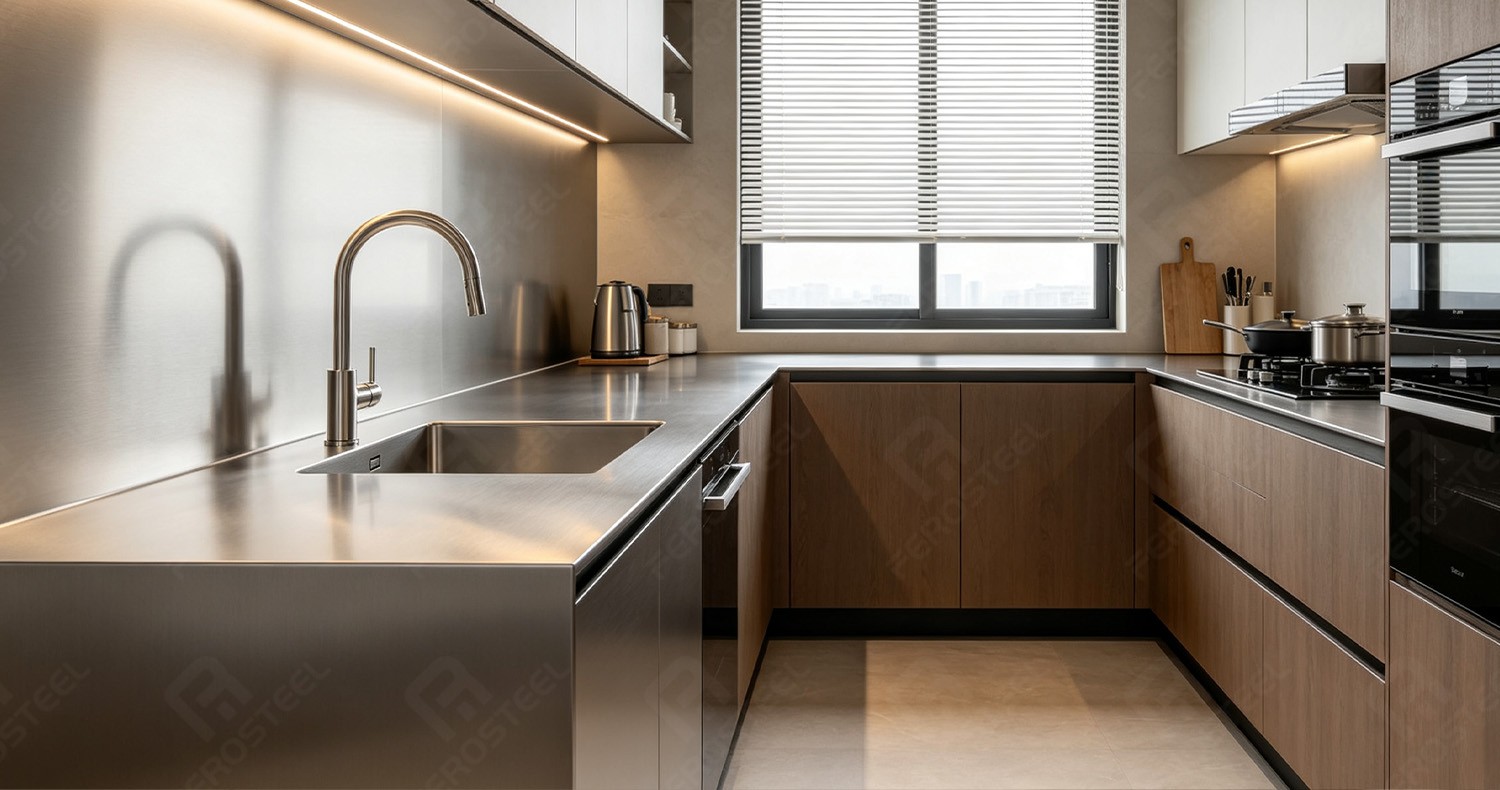
Commercial kitchens demand surfaces that can survive constant abuse: hot pans, sharp knives, acidic sauces, and aggressive cleaning routines. Yet many materials trade beauty for durability, or vice versa. Anti-scratch stainless steel countertop sheets offer a rare combination—an attractive, hygienic finish that resists everyday wear and keeps professional kitchens running with minimal downtime.
At Ferosteel, we supply cross hairline stainless steel countertop sheets engineered specifically for high-traffic food preparation, hotel back-of-house, restaurant pass-through counters, and residential kitchens that need pro-level performance. In this guide, architects, interior designers, and contractors will learn how anti-scratch finishes work, which grade to specify, and why a cross hairline countertop is a smart investment for any commercial kitchen surface.
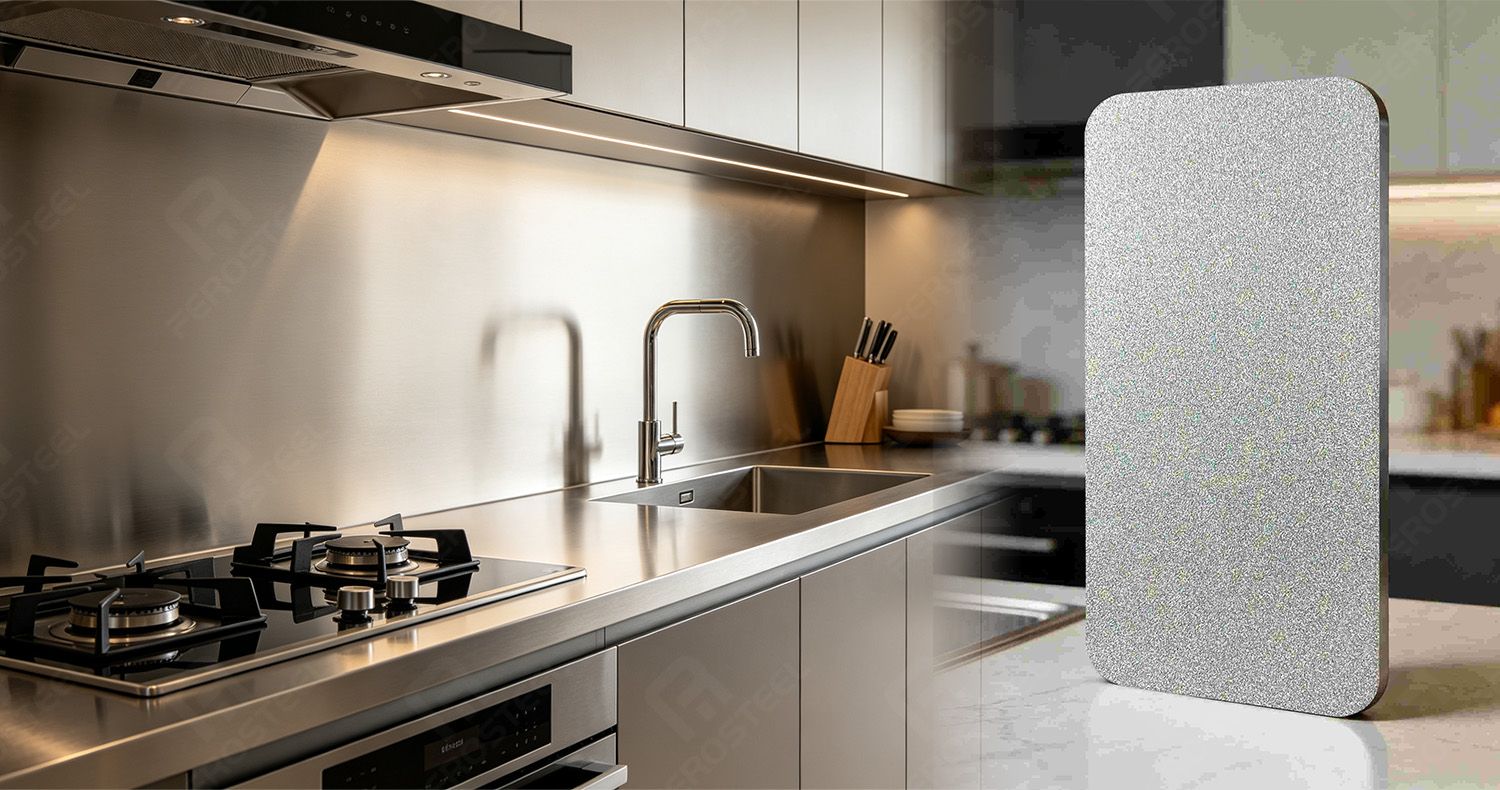
"Anti-scratch" does not mean a surface is impossible to damage. It means the finish is designed to mask minor scratches and maintain a consistent appearance under normal use. Two factors make stainless steel countertop sheets perform this role well:
For busy commercial kitchens, durable stainless steel with a cross hairline texture is one of the most practical choices. It forgives the daily scrapes from cutting boards, metal containers, and utensil contact that would ruin a mirror or polished finish.
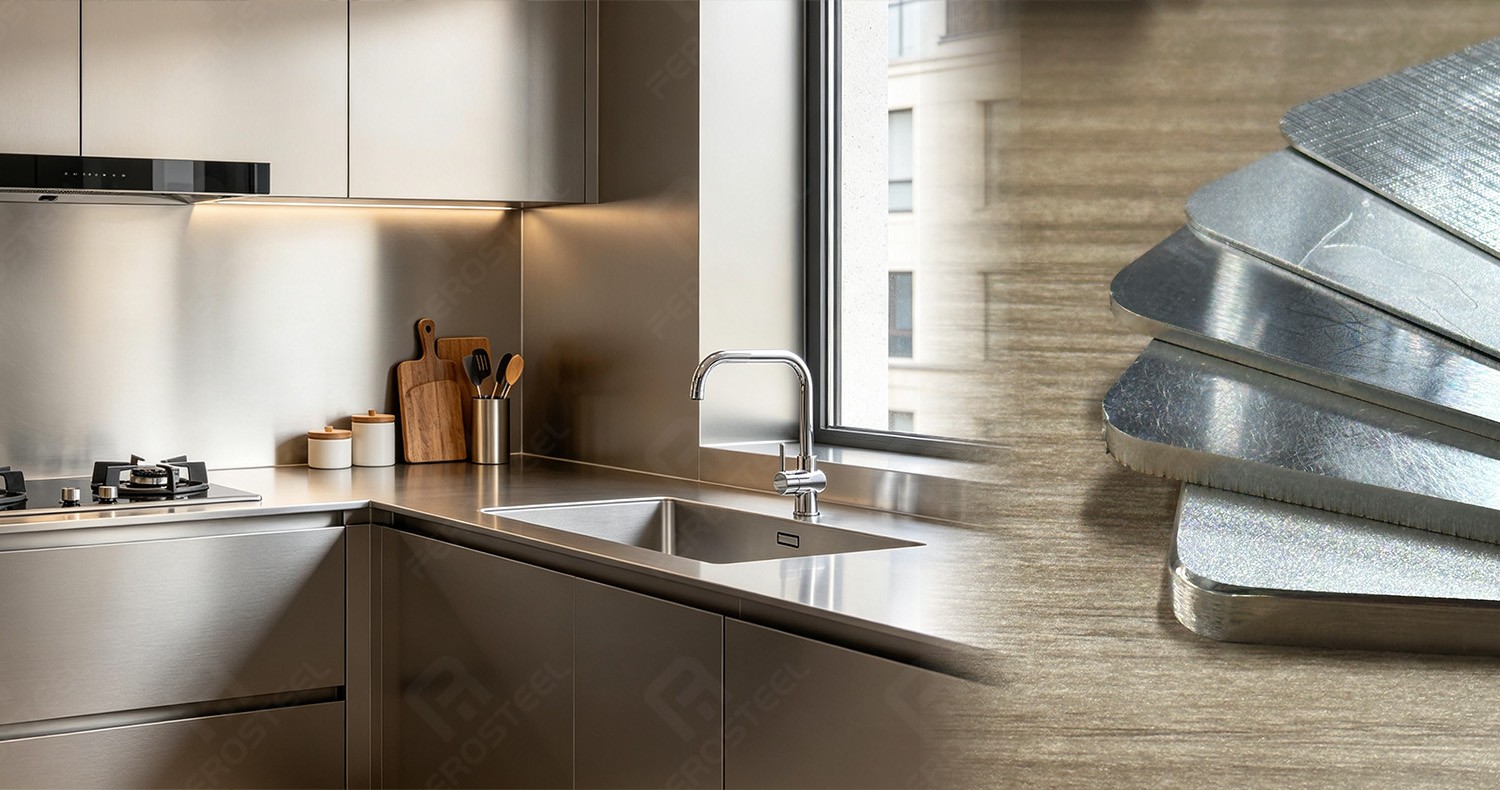
A cross hairline countertop is produced by brushing the metal surface in two perpendicular directions. The result is a subtle, intersecting grain pattern that diffuses reflections and breaks up the visual impact of fine scratches.
The cross-hatch pattern is especially valuable in commercial kitchen surface design because it maintains a clean, uniform look even when the counter sees constant activity. Unlike mirror finishes that reveal every fingerprint and scuff, cross hairline surfaces stay presentable with basic wiping.
For countertops, thickness matters. Thicker sheets resist denting as well as scratching. Common specifications include:
We typically recommend 14 gauge or thicker for restaurant and hotel kitchens where impact resistance is as important as scratch resistance.
Choosing the right stainless steel countertop finish depends on how the space will be used. The table below compares cross hairline with other popular finishes.
| Feature | Cross Hairline | Mirror (No. 8) | Bead Blast | Embossed (e.g., 5WL, 6WL) |
|---|---|---|---|---|
| Scratch resistance | Excellent | Poor | Good | Very Good |
| Scratch visibility | Very low | High | Moderate | Low |
| Cleaning effort | Easy | High (shows fingerprints) | Moderate | Moderate |
| Reflectivity | Low | Very high | Matte | Low to moderate |
| Best use | Commercial kitchens, prep stations | Decorative walls, display | Labs, clean rooms | Wall panels, elevator interiors |
| Cost (per comparable grade) | Moderate | High | Moderate | Moderate to high |
The cross hairline countertop clearly wins in kitchen environments where appearance must remain consistent without constant polishing. Mirror finishes are stunning but unforgiving; embossed patterns are durable but often more visually aggressive and harder to clean around deep texture. Cross hairline sits in the practical sweet spot: durable, attractive, and easy to maintain.
A commercial kitchen is not a gentle environment. Counters are struck by pans, scraped by metal trays, sliced near, and wiped down dozens of times per shift. Over time, even minor scratches collect food residue, harbor bacteria, and make the surface harder to sanitize. An anti scratch stainless steel countertop solves these problems in three specific ways:
Scratches create microscopic valleys where bacteria can hide. A finish that resists visible scratching also tends to resist deep gouging, leaving fewer places for pathogens to accumulate. Stainless steel is already the preferred material in food-service environments because it is non-porous and does not support microbial growth.
In open kitchens, food counters are part of the customer experience. A countertop that looks worn or scratched reflects poorly on the operation. Cross hairline finishes maintain a professional appearance between deep-cleaning cycles, which is why they are increasingly specified in front-of-house cooking stations and hotel buffet counters.
Durable stainless steel countertops require fewer repairs, less frequent replacement, and minimal refinishing. When evaluated over a 10-year period, the total cost of ownership for a quality cross hairline countertop is often lower than laminate, wood, or stone alternatives that stain, chip, or need resealing.
Not all stainless steel performs the same in kitchen environments. The two most common grades are 304 and 316.
For the majority of commercial kitchen surface projects, 304 stainless steel offers the best balance of performance and cost. Specify 316 only when the environment involves prolonged salt exposure or aggressive chemicals.
Anti-scratch stainless steel countertop sheets are used across a wide range of projects. Here are the most common specifications we see:
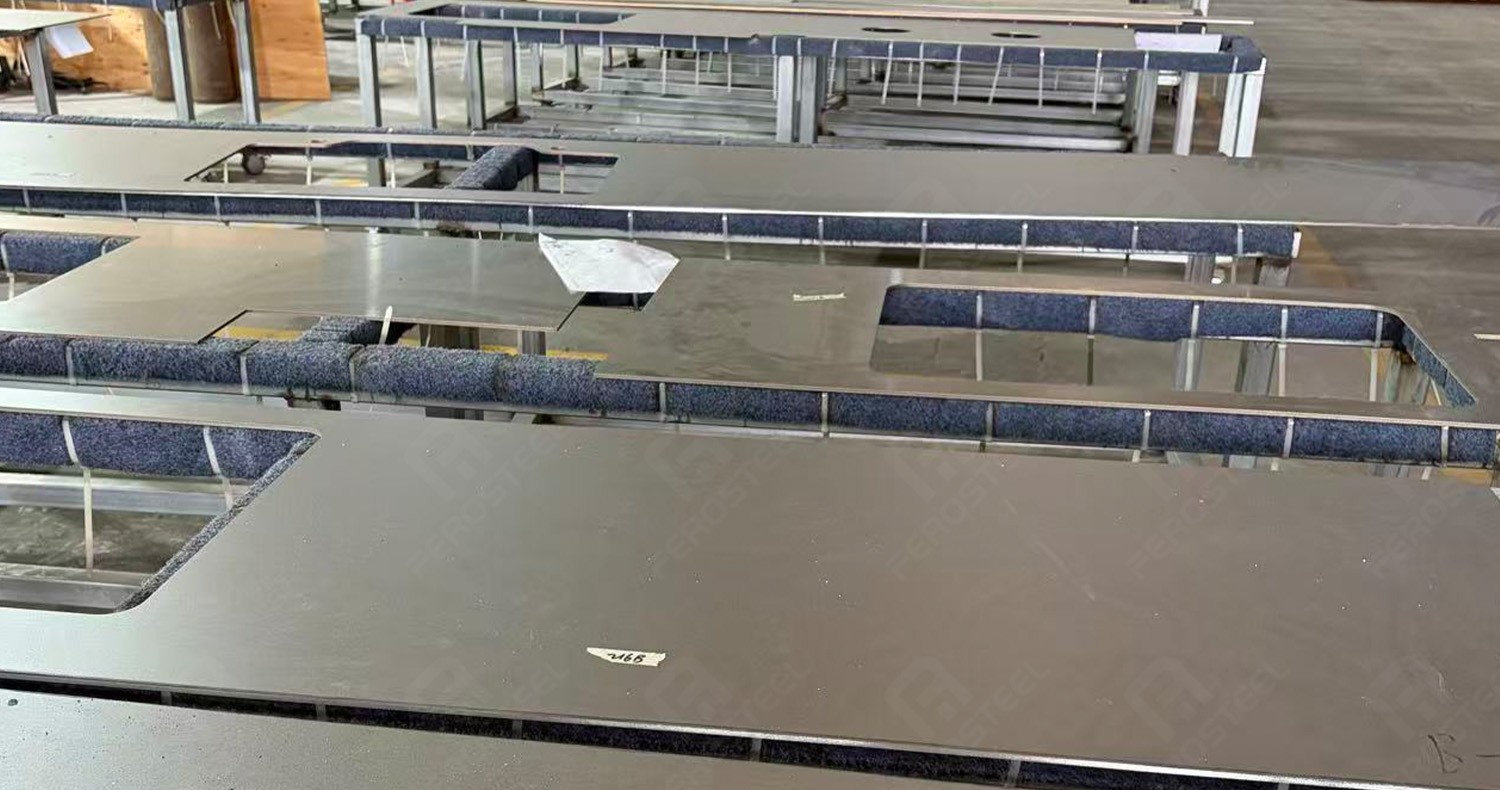
For each of these applications, Ferosteel supplies custom-sized cross hairline stainless steel countertop sheet panels. Our standard sheet dimensions are 1219 × 2438 mm (4 × 8 ft), but we can cut to project size or supply coils for continuous fabrication.
Proper installation extends the life of a stainless steel countertop and preserves its anti-scratch properties.
With this routine, an anti scratch stainless steel countertop can remain serviceable and attractive for well over a decade.
No. "Anti-scratch" means the finish is designed to hide minor scratches and resist light abrasion. Deep cuts from knives or heavy metal edges can still mark the surface. Using cutting boards and avoiding dragging heavy metal objects will preserve the finish.
Hairline finish has a single-direction brushed grain. Cross hairline finish uses two perpendicular brushing passes, creating a cross-hatched pattern. The cross pattern is better at hiding scratches and fingerprints in high-use kitchen environments.
Yes. Cross hairline countertop sheets are increasingly specified in residential kitchens because they combine industrial durability with a modern, low-maintenance look. They are especially popular in homes that want a professional chef's kitchen aesthetic.
For coastal or high-salt environments, 316 stainless steel is recommended. Its molybdenum content provides better resistance to chloride corrosion than 304. In standard inland kitchens, 304 is sufficient and more cost-effective.
For most commercial kitchens, 14 gauge (1.8 mm) is the minimum recommended thickness. Heavy-duty fabrication tables and butcher blocks may require 12 gauge (2.5 mm) or thicker to resist denting and impact.
Yes. Stainless steel is non-porous, so it does not absorb liquids, odors, or bacteria. The cross hairline texture is shallow enough to be sanitized easily, making it a common choice for food-service counters and medical-grade surfaces.
Explore more Ferosteel resources on decorative stainless steel surfaces:
Ready to specify a durable stainless steel countertop for your next commercial kitchen project? Ferosteel supplies custom-sized Cross Hairline Stainless Steel Countertop Sheet panels in 304 and 316 grades, with anti-fingerprint coating and edge fabrication options available. Contact us for free samples, material quotations, and technical support for architects, designers, and contractors worldwide.
 Office address: 26 Floor, Shibo Financial Center, Fenjiang South Road No.38, Chancheng, Foshan, GuangDong, China
  Phone
: +86 -18024913898
Phone
: +86 -18024913898 Correo electrónico
: [email protected]
Correo electrónico
: [email protected]


 IPv6 RED SOPORTADA
 dejar un mensaje