Meta Description: B2B guide to stainless steel elevator decoration: 304/316L grades, PVD colors, mirror & hairline finishes, anti-fingerprint coatings, supplier evaluation.
Primary Keyword: stainless steel elevator
Target Audience: Elevator manufacturers, construction contractors, building material importers, interior designers
Stainless steel elevator interiors are among the most heavily used surfaces in any commercial building. In a typical Class A office tower, stainless steel elevator doors and cabin walls endure thousands of contact events daily — from handprints and luggage bumps to cleaning chemical exposure. Yet many project buyers still default to standard painted steel or low-grade panels, only to face costly replacements within 2–3 years.
The core problem in the stainless steel elevator industry is multi-layered: conventional spray-painted metal surfaces chip and fade under high-frequency use. Off-the-shelf 201-grade panels often develop surface oxidation in humid elevator shafts. And sourcing from stainless steel elevator suppliers without integrated deep-processing capabilities leads to color inconsistency across batches — a cosmetic flaw that is painfully obvious when multiple elevator cabins in the same building don't match.
According to 2025 industry data, the Chinese stainless steel elevator market alone has surpassed RMB 12 billion, with colored stainless steel finishes accounting for over 35% and growing at a compound annual rate above 10%. The trend is unmistakable: project owners are moving away from "good enough" toward "specification-grade" stainless steel elevator materials that pass visual, durability, and maintenance tests simultaneously.
For B2B buyers, the key question is no longer whether to use quality stainless steel for elevator decoration — but how to source the right grade, finish, and stainless steel elevator supplier partnership to avoid downstream headaches.
Related: Water Ripple Stainless Steel Sheet Buying Guide
Not all stainless steel performs equally inside an elevator shaft. The industry standard for premium stainless steel elevator decoration is 304 stainless steel (UNS S30400), which contains 18% chromium and 8% nickel, delivering excellent corrosion resistance and formability. For coastal or high-humidity environments, 316L stainless steel (UNS S31603) is recommended — its 2–3% molybdenum content provides superior pitting resistance against chloride exposure common in seaside hotels and humid underground parking elevator lobbies.
From Ferosteel's specification sheet, the standard material grades offered are:
| Grade | Composition | Best For |
|---|---|---|
| 304 | 18Cr-8Ni | Standard commercial elevators, office towers, shopping malls |
| 316L | 16Cr-10Ni-2Mo | Coastal hotels, outdoor escalators, high-humidity environments |
| 201 | 16Cr-3.5Ni-5.5Mn | Budget-sensitive projects with moderate usage |
Thickness directly impacts stainless steel elevator panel rigidity, sound insulation, and perceived quality. Industry best practices for stainless steel elevator projects:
Stainless steel elevator panels thinner than 1.0mm risk warping under high-frequency door operation and show visible undulations under side lighting — a detail architects and interior designers immediately notice. Ferosteel provides stainless steel elevator panel thicknesses from 0.4mm to 2.0mm, with standard widths of 1000mm, 1220mm, and 1500mm, and lengths customizable to 2000mm, 2438mm, 3048mm, or project-specific dimensions.
The surface finish determines both the visual character and maintenance profile of a stainless steel elevator interior. The most in-demand finishes for 2025–2026 stainless steel elevator projects include:
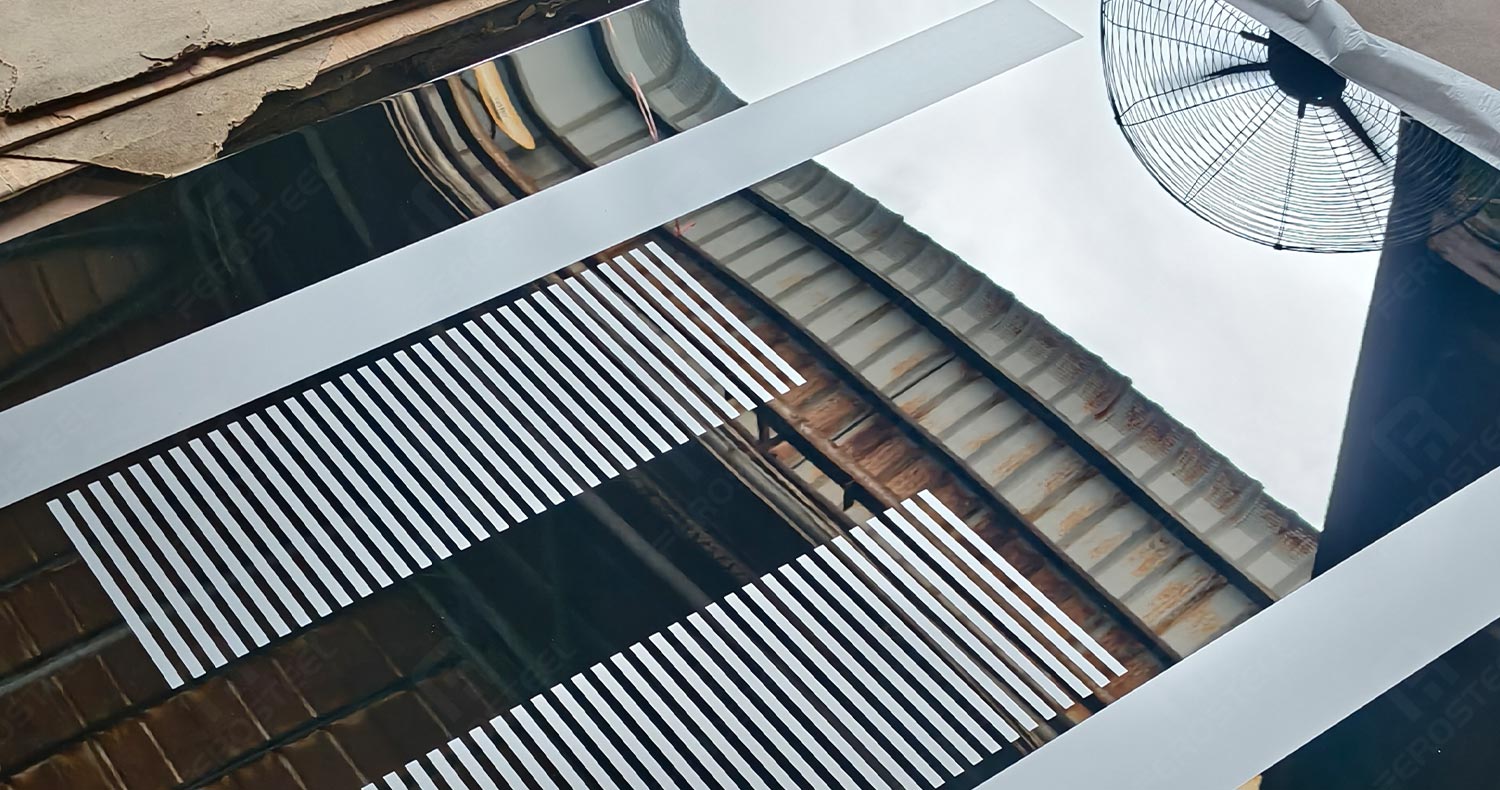
8K Mirror Finish (SuperMirror): Achieves a reflectivity rating of No.8 — the highest in the industry. Provides a distortion-free mirror effect that makes elevator cabins feel significantly more spacious. Used extensively in luxury hotel and premium office lobbies.
Hairline (HL/Satin): Produces a consistent, fine-grain linear texture that masks fingerprints and minor scratches far better than mirror finishes. The preferred choice for high-traffic commercial elevators where maintenance frequency is a concern.
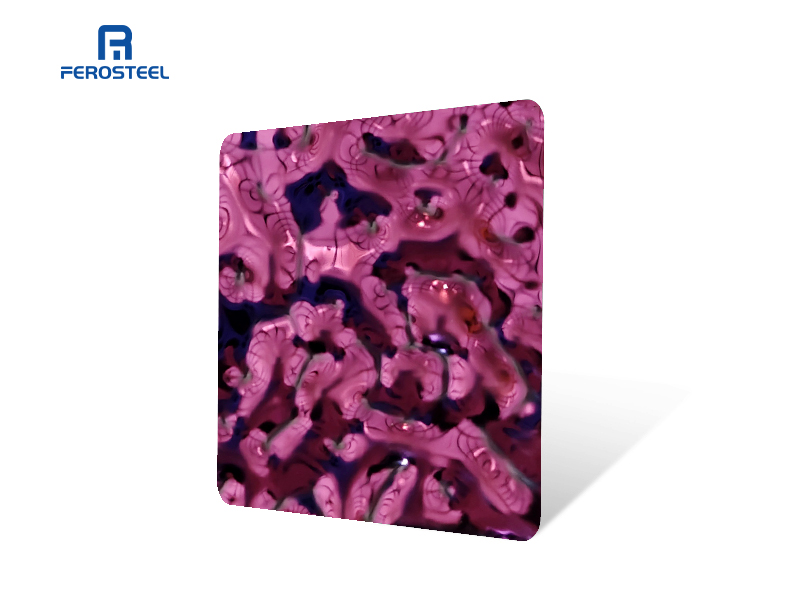
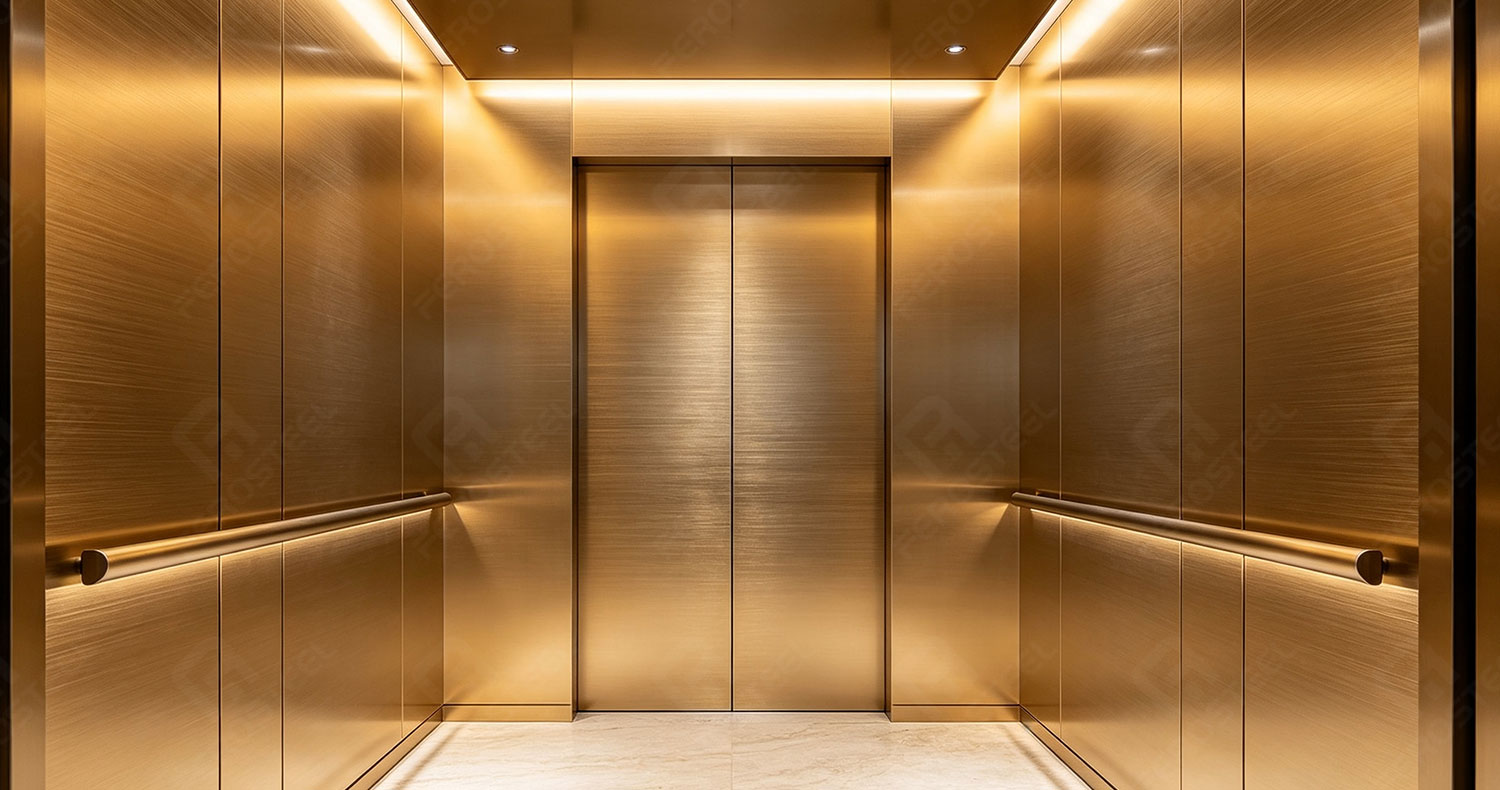
PVD Colored Finishes: Vacuum-deposited titanium-based coatings produce durable colors including champagne gold, rose gold, black titanium, and sapphire blue. Unlike traditional electroplating, PVD coatings bond at the molecular level and typically last 10+ years without fading — a standard Ferosteel guarantees in writing.
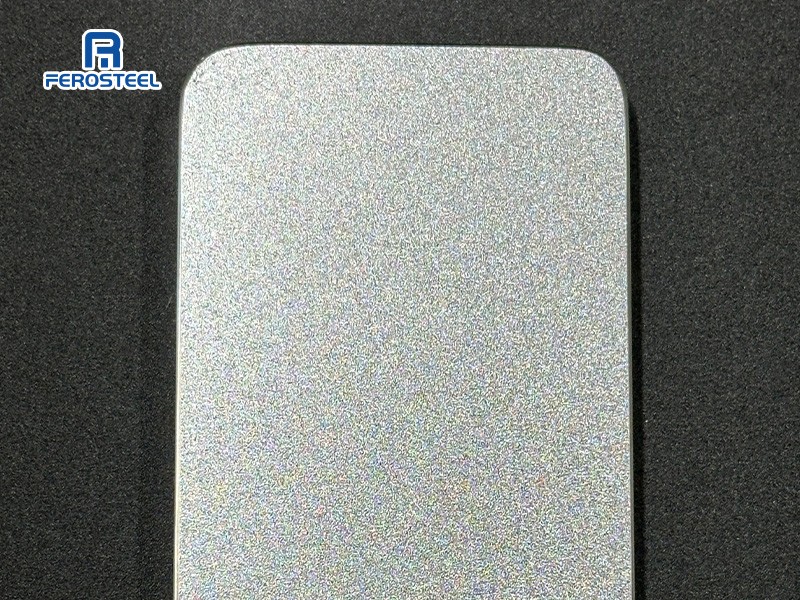
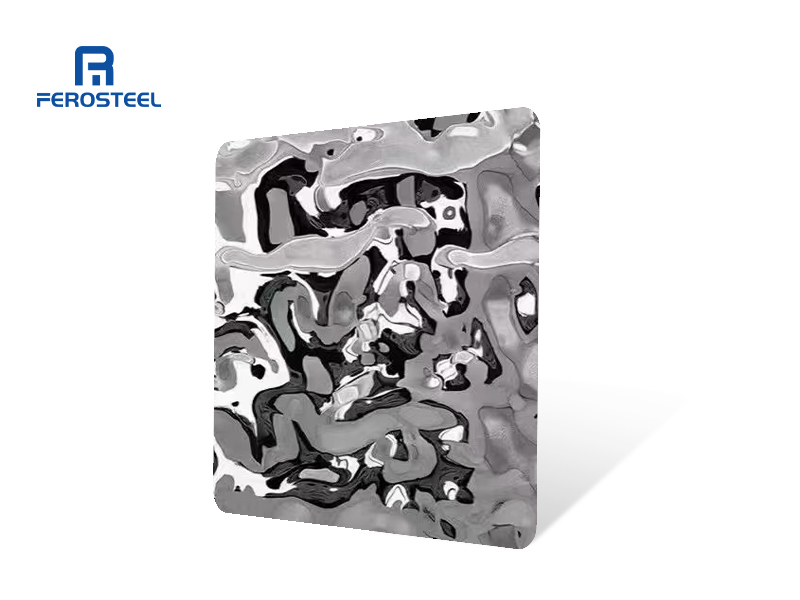
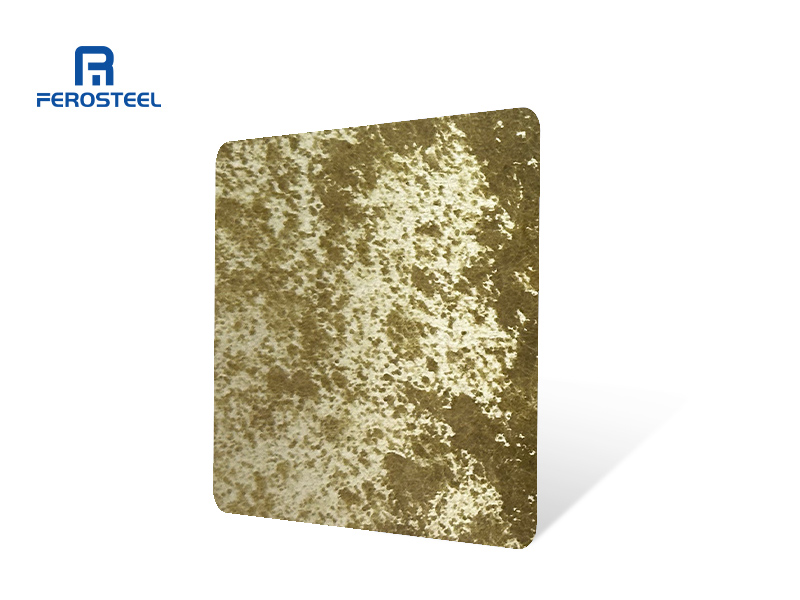
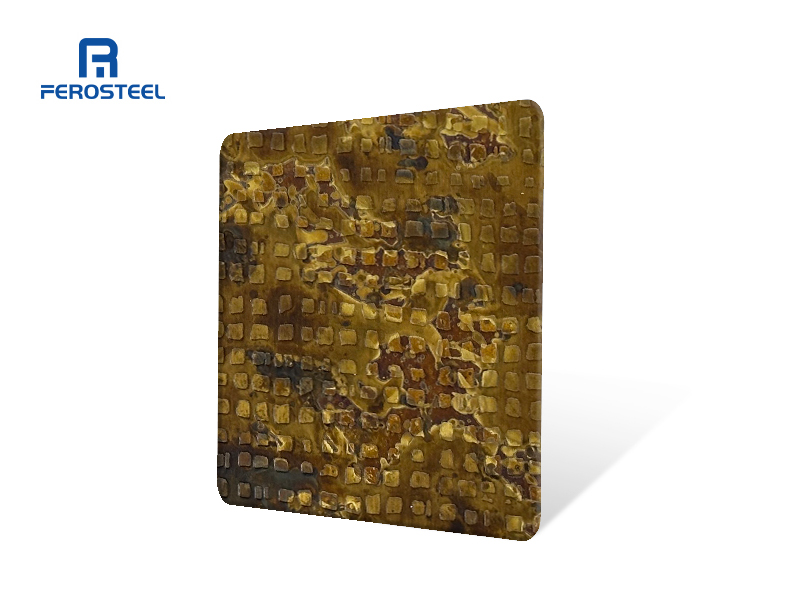
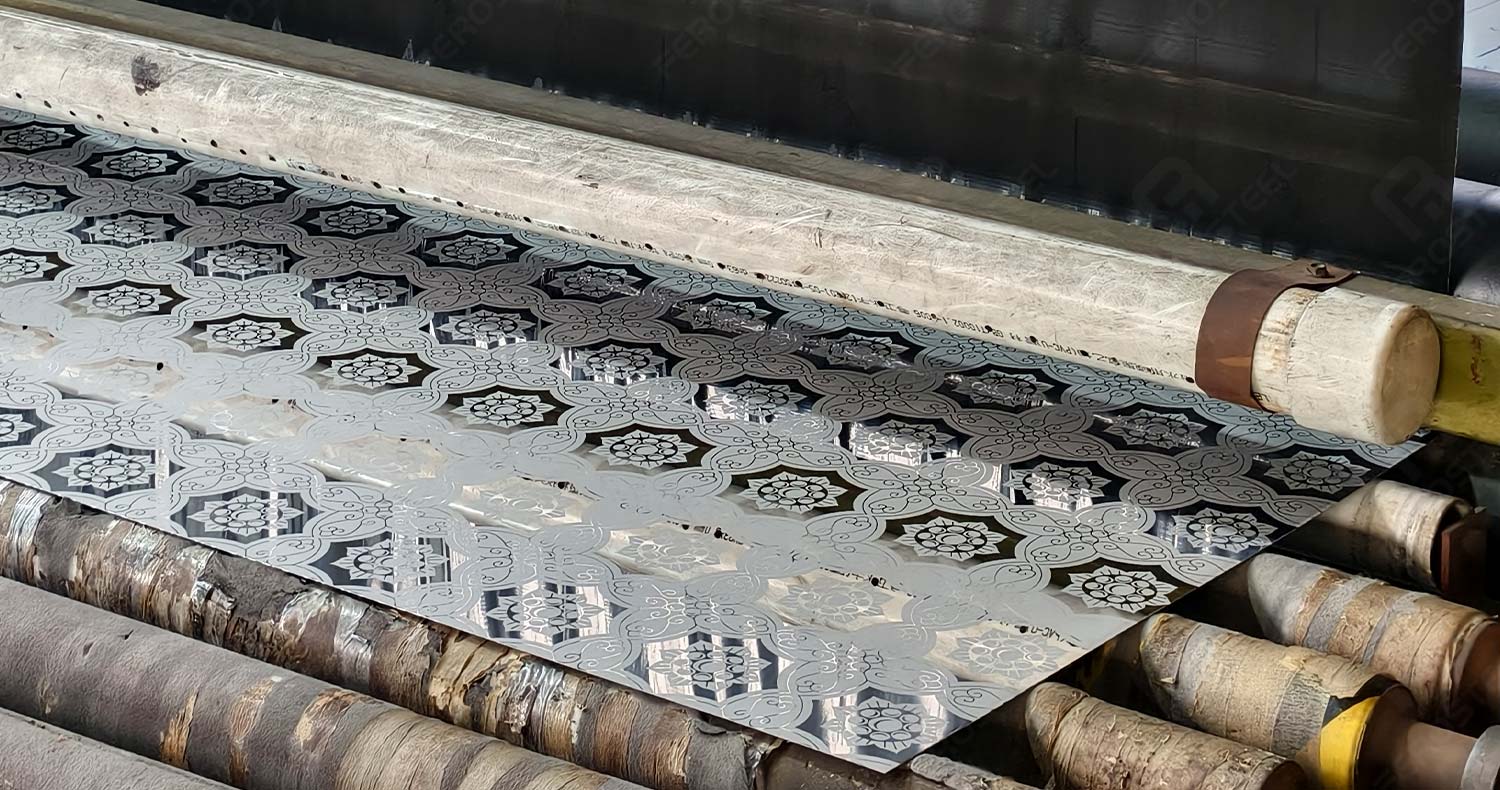
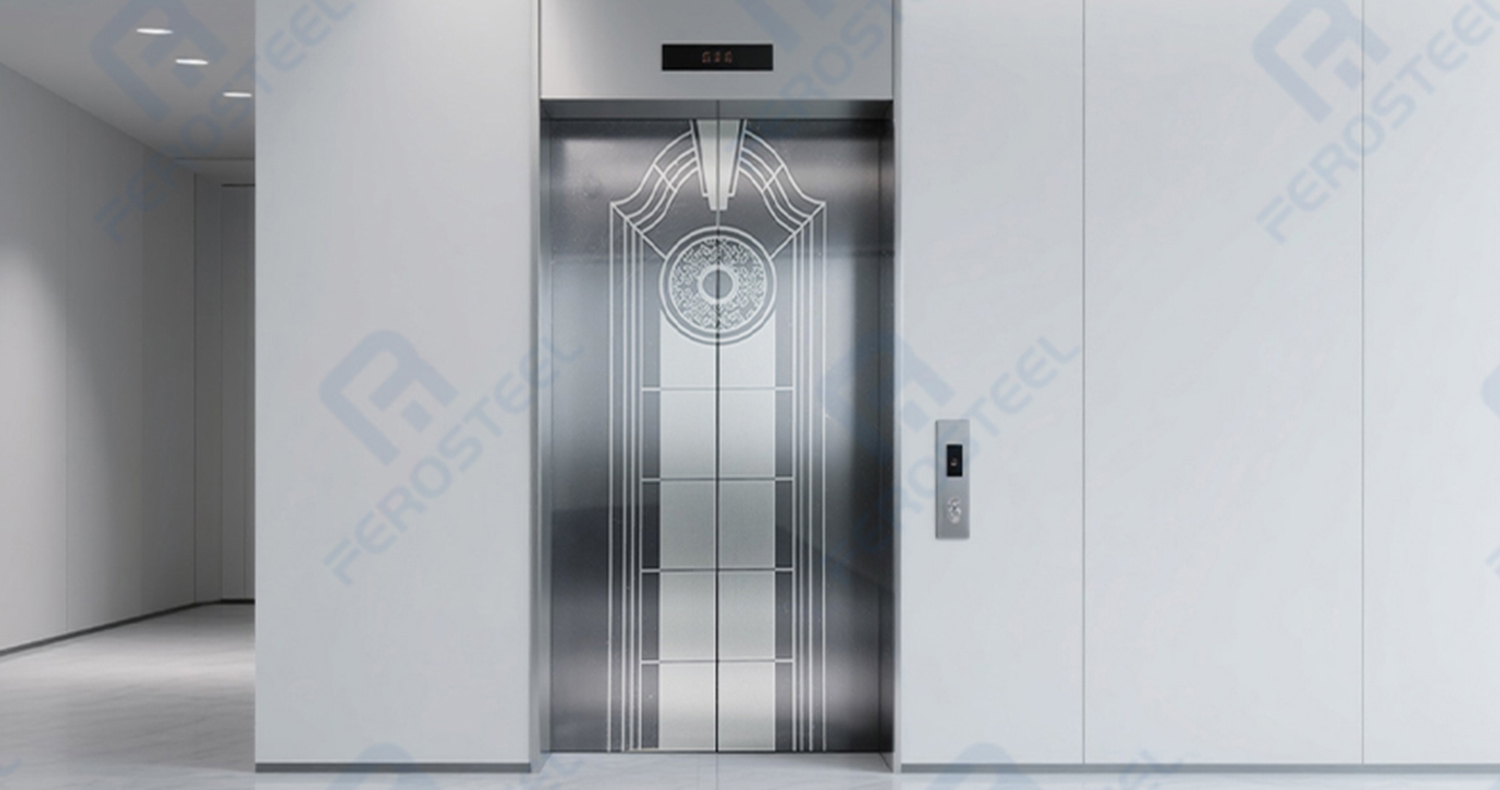
Etched & Embossed Patterns: For projects requiring distinctive branding or architectural identity, etching and embossing can create custom textures ranging from geometric grids to organic patterns. These can be combined with PVD coloring for multi-dimensional visual effects.
Anti-Fingerprint (AFP) Coating: A nanoscale transparent layer that reduces fingerprint visibility by approximately 70%, cutting maintenance frequency by nearly half. Industry statistics show that AFP-treated elevator panels maintain their original appearance 3x longer than untreated surfaces.
Related: PVD Colored Stainless Steel Sheet: Specifications & Applications
As a stainless steel decorative panel manufacturer founded in 2017 in Foshan — China's stainless steel capital — Ferosteel has built its reputation on solving the exact procurement challenges stainless steel elevator project buyers face.
The fundamental advantage Ferosteel offers over trading companies or limited-process workshops is vertical integration. While many stainless steel elevator suppliers outsource cutting, bending, or coating to third-party factories — creating quality gaps and communication delays — Ferosteel controls the entire stainless steel elevator production workflow in-house:
This closed-loop production eliminates the "finger-pointing" problem that occurs when defects arise in multi-supplier chains. When Ferosteel ships a stainless steel elevator panel order, one team is accountable for every step.
Ferosteel holds SGS certification and operates under an ISO 9001 quality management system. Products comply with ROHS and REACH environmental standards. For stainless steel elevator applications, panels are tested for:
Related: About Ferosteel — Factory Capabilities & History
In a competitive leasing market, the stainless steel elevator experience shapes tenant impressions within the first 10 seconds. Leading projects increasingly specify PVD champagne gold or black titanium panels for stainless steel elevator doors and cabin interiors, often paired with 8K mirror accents on ceiling panels and handrail trims. The goal is a "luxury hotel lobby" feel that signals premium positioning to prospective tenants.
Hotel stainless steel elevator decoration demands both aesthetics and extreme durability. A single hotel stainless steel elevator can cycle 500+ times daily. Ferosteel's PVD rose gold panels used in Sheraton Yangon Hotel's lobby stainless steel elevators — a landmark project completed with Ferosteel's honeycomb stainless steel cladding — demonstrate how factory-direct supply can meet demands for unique textures (like water ripple or embossed patterns) without compromising on delivery timelines.
High foot traffic and exposure to shopping carts, strollers, and handprints make stainless steel elevator durability the top priority. Hairline-finished 304 stainless steel elevator panels with anti-fingerprint coating is the practical standard here. The brushed texture actively conceals minor scratches, while the AFP coating reduces daily cleaning frequency — directly lowering facility management costs.
These public infrastructure stainless steel elevator projects operate 18–24 hours daily and must comply with fire safety and wear-resistance standards. 304-grade stainless steel elevator panels with satin or hairline finish are commonly specified. Module prefabrication — where stainless steel elevator panels are factory-cut to exact dimensions and pre-assembled — is increasingly required to minimize on-site installation time and avoid disrupting station operations.
While the volume per project is smaller, residential stainless steel elevator decoration is a rapidly growing segment. Demand clusters around compact 304 stainless steel elevator panels with PVD coloring — champagne gold and rose gold being the most popular — creating a refined, hotel-inspired ambiance in private residences.
Related: Decorative Stainless Steel Panels: B2B Sourcing Guide
PVD color matching across batches is the most frequent complaint in stainless steel elevator projects — especially when a building has 6–8 elevator cabins that must look identical. Ferosteel's in-house PVD coating line, using vacuum ion deposition, achieves Delta E < 2.0 color difference between stainless steel elevator panels — below the threshold of human perception.
Ferosteel applies nano-scale AFP coating as a standard option on stainless steel elevator panels. This isn't a cosmetic add-on; it fundamentally changes the maintenance economics of stainless steel elevator ownership by reducing cleaning frequency by approximately 50%.
PVD-coated panels from Ferosteel are warrantied for color fastness exceeding 10 years under normal indoor conditions — backed by the molecular bonding strength of vacuum-deposited coatings versus traditional electroplating.
Stainless steel elevator panels require exact dimensions because installation tolerances are unforgiving. Ferosteel's CNC-controlled cutting and bending achieves diagonal tolerances ≤ ±1mm on stainless steel elevator panels up to 6 meters — ensuring panels fit first time on site.
Every batch is traceable to the original mill coil certificate, with documented processing history through each production stage. This is particularly valued by European and Middle Eastern importers who require REACH compliance documentation.
Ferosteel exports to Southeast Asia, the Middle East, and South America. The company's logistics team manages ocean freight FCL/LCL bookings, export documentation (CI, PL, CO, Form E), and ensures packaging meets international break-bulk handling standards.
For qualified B2B buyers, Ferosteel provides A4-size finish sample kits — enabling project teams to evaluate texture, color, and quality before committing to bulk orders. Sample lead time is typically 3–5 working days with express shipping.
Ask whether the supplier performs PVD coating, laser cutting, and bending in-house. If any of these are outsourced, quality control and lead time predictability drop significantly. Request factory photos showing each stainless steel elevator processing station.
A credible stainless steel elevator supplier should provide case studies with project names, completion dates, and material specifications. Ferosteel's project portfolio includes the Sheraton Yangon Hotel honeycomb cladding project and multiple commercial tower stainless steel elevator interiors.
Always obtain physical finish samples before ordering. Compare under the same lighting conditions expected at the installation site. Check for color uniformity across the full sample, edge finish quality, and coating adhesion (a simple coin scratch test reveals poor PVD).
For stainless steel elevator projects with 20+ elevator cabins, supplier capacity becomes critical. Ask for: daily production capacity (in square meters), current order backlog, and confirmed delivery window. Ferosteel's standard lead time for container orders is 7–15 working days from deposit receipt.
Stainless steel elevator panels are large-format fragile goods. Proper packaging — PVC film on finished surfaces, waterproof interleaving paper, reinforced wooden crates, and corner protectors — prevents transit damage. Confirm FOB/CIF terms and shipping schedule alignment with your construction timeline.
What happens if a stainless steel elevator panel arrives damaged or shows color deviation on-site? Clarify the supplier's replacement policy, claim procedure, and response time. Ferosteel provides multi-angle pre-shipment photos and video for every export order to establish a visual quality baseline before shipping.
Q1: What stainless steel grade should I use for stainless steel elevator door panels? For most commercial stainless steel elevator applications, 304-grade stainless steel at 1.2mm–1.5mm thickness is the recommended standard. It offers an optimal balance of corrosion resistance, rigidity, and cost. For coastal or high-humidity locations, upgrade to 316L.
Q2: How long does PVD color last on stainless steel elevator panels? Under normal indoor conditions, PVD-coated stainless steel elevator panels maintain their color for 10+ years without fading. PVD (Physical Vapor Deposition) bonds the coating at a molecular level, making it significantly more durable than electroplated finishes for stainless steel elevator applications.
Q3: What is the minimum order quantity (MOQ) for stainless steel elevator decoration panels? Ferosteel maintains flexible MOQ policies for stainless steel elevator projects. While there is no strict minimum, a practical order of at least 10 panels is recommended for production efficiency. Sample kits (A4-size finish samples) are available for project evaluation with no minimum quantity.
Q4: Can Ferosteel match custom colors for stainless steel elevator projects? Yes. Ferosteel's PVD coating process supports custom color matching based on client-provided color samples (e.g., RAL, Pantone references). Sample matching for stainless steel elevator panels typically takes 3–5 working days, and bulk production color consistency is maintained through standardized process parameters.
Q5: What certifications does Ferosteel provide? Ferosteel provides SGS test reports, ISO 9001 quality management certification, and mill test certificates (MTC) for raw material. ROHS and REACH compliance documentation can be supplied for EU-bound shipments.
Q6: Can stainless steel elevator panels be fabricated to custom dimensions? Absolutely. Beyond standard sheet sizes (1000×2000mm, 1220×2438mm, 1500×3048mm), Ferosteel provides cut-to-size, laser-cut profiles, CNC-bent door frames, and welded assemblies — all based on client-provided CAD drawings. Custom shapes for curved stainless steel elevator cabins or irregular architectural features are supported.
Q7: How do I clean and maintain stainless steel elevator panels? For routine cleaning of stainless steel elevator panels, use a soft microfiber cloth with warm water and a mild pH-neutral detergent. Avoid abrasive cleaners, steel wool, or chlorine-based disinfectants on PVD-coated surfaces. AFP-treated stainless steel elevator panels require approximately 50% less cleaning frequency compared to untreated surfaces. For deep cleaning, Ferosteel provides a full maintenance guide with every shipment.
Choosing the right stainless steel elevator decoration is a decision that affects project aesthetics, maintenance costs, and end-user satisfaction for years. Ferosteel brings factory-direct pricing, fully integrated stainless steel elevator production, and export-grade quality control to every project — from single-unit villa lifts to multi-tower commercial complexes.
Contact Ferosteel's stainless steel elevator decoration team today:
Request a free finish sample kit, share your project drawings for a customized quotation, or schedule a video factory tour to see our production line in action.
Related Resources: - Water Ripple Stainless Steel Sheet — Product Details - PVD Colored Stainless Steel Sheet — Technical Specifications - Decorative Stainless Steel Panels — Complete Range - Ferosteel Factory & Capabilities Overview - Talk to Our Sales Team
 Office address: 26 Floor, Shibo Financial Center, Fenjiang South Road No.38, Chancheng, Foshan, GuangDong, China
  Phone
: +86 -18024913898
Phone
: +86 -18024913898 Correo electrónico
: [email protected]
Correo electrónico
: [email protected]


 IPv6 RED SOPORTADA
 dejar un mensaje