Table of Contents
Physical Vapor Deposition (PVD) is an advanced vacuum coating technology that deposits a thin, molecularly bonded layer of material onto stainless steel surfaces. Unlike traditional wet plating methods, PVD coating stainless steel creates a finish that is both decorative and functional — producing rich metallic colors while enhancing surface hardness, wear resistance, and corrosion protection.
The process happens inside a vacuum chamber at temperatures between 250°C and 450°C. A solid source material — typically titanium, zirconium, chromium, or their compounds — is vaporized and then condenses onto the stainless steel substrate as an ultra-thin film, typically 0.3 to 5 microns thick. Despite its microscopic thickness, this decorative PVD finish forms a metallurgical bond that is dramatically harder and more durable than the underlying stainless steel surface.
For architects and interior designers, PVD opens up an entirely new design vocabulary. A single grade of 304 or 316L stainless steel can be transformed into rose gold, champagne, black, bronze, blue, or virtually any metallic hue — without compromising the material's inherent fire resistance, hygiene, or recyclability.
Understanding how PVD coating works helps architects specify it correctly. The process proceeds through four key stages:
Before coating, stainless steel sheets undergo thorough cleaning and surface preparation. The substrate must be free of oils, oxides, and contaminants. Common pre-treatment methods include ultrasonic degreasing, alkaline cleaning, and in some cases, a light ion etching inside the vacuum chamber itself to activate the surface at an atomic level.
Once the stainless steel is loaded into the chamber and a high vacuum is achieved, the coating material — typically a metal or ceramic target — is energized. In cathodic arc evaporation (the most common method for architectural PVD), an electric arc strikes the target material, instantly vaporizing it into a plasma of ionized particles.
For colored finishes, reactive gases such as nitrogen (N₂), acetylene (C₂H₂), or oxygen (O₂) are introduced into the chamber. These gases react with the vaporized metal ions to form ceramic-like compounds — titanium nitride (TiN) for gold tones, titanium carbonitride (TiCN) for rose gold and bronze, and zirconium nitride (ZrN) for brass and champagne shades. The precise gas mixture and process parameters determine the final color.
The ionized particles are accelerated toward the stainless steel surface by an electrical bias, where they condense and chemically bond to form a hard, dense coating. Because this is a physical and chemical bond at the molecular level — not merely an adhesive layer — the coating achieves exceptional adhesion that resists peeling, chipping, and delamination even under demanding conditions.
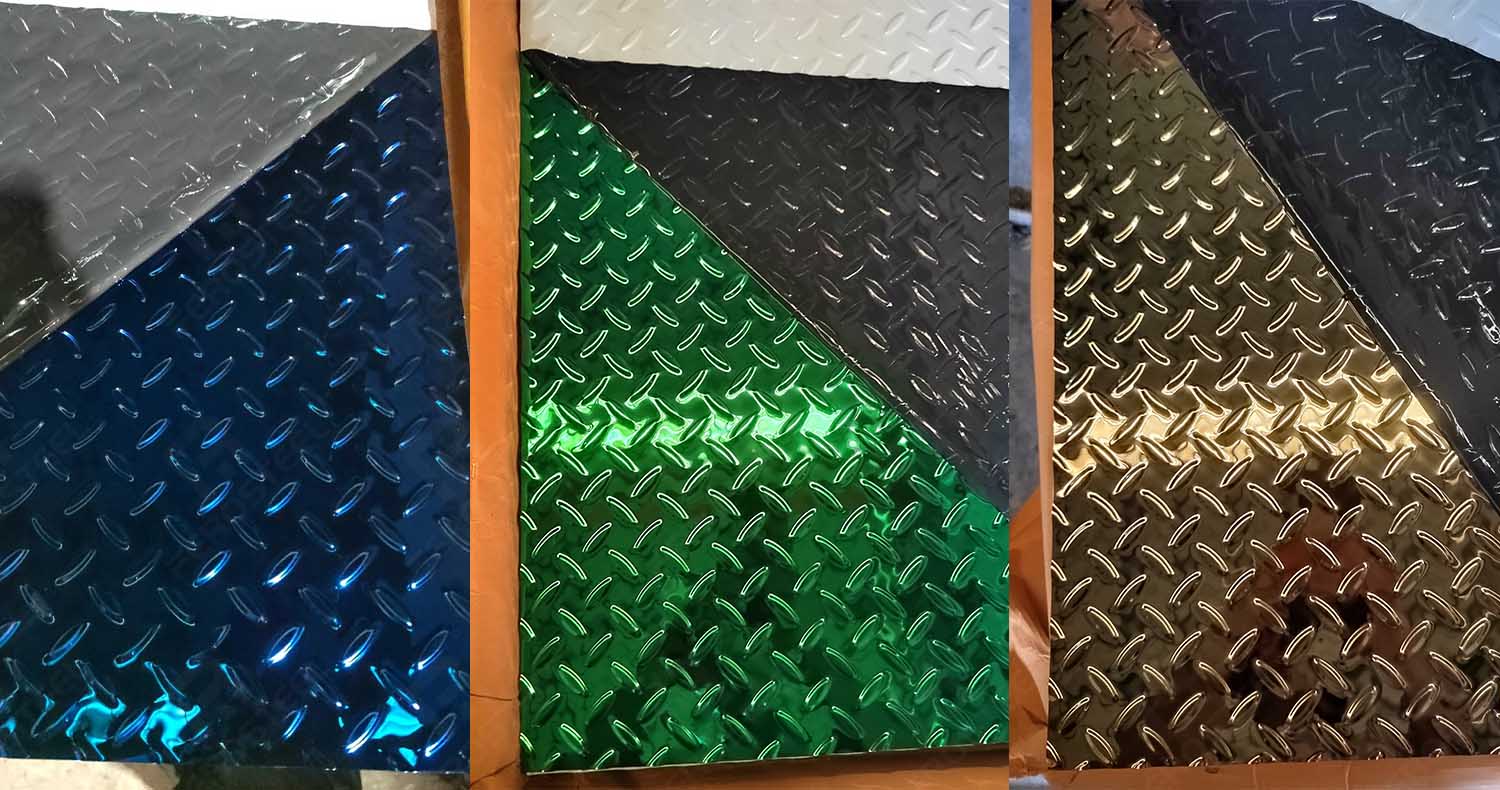
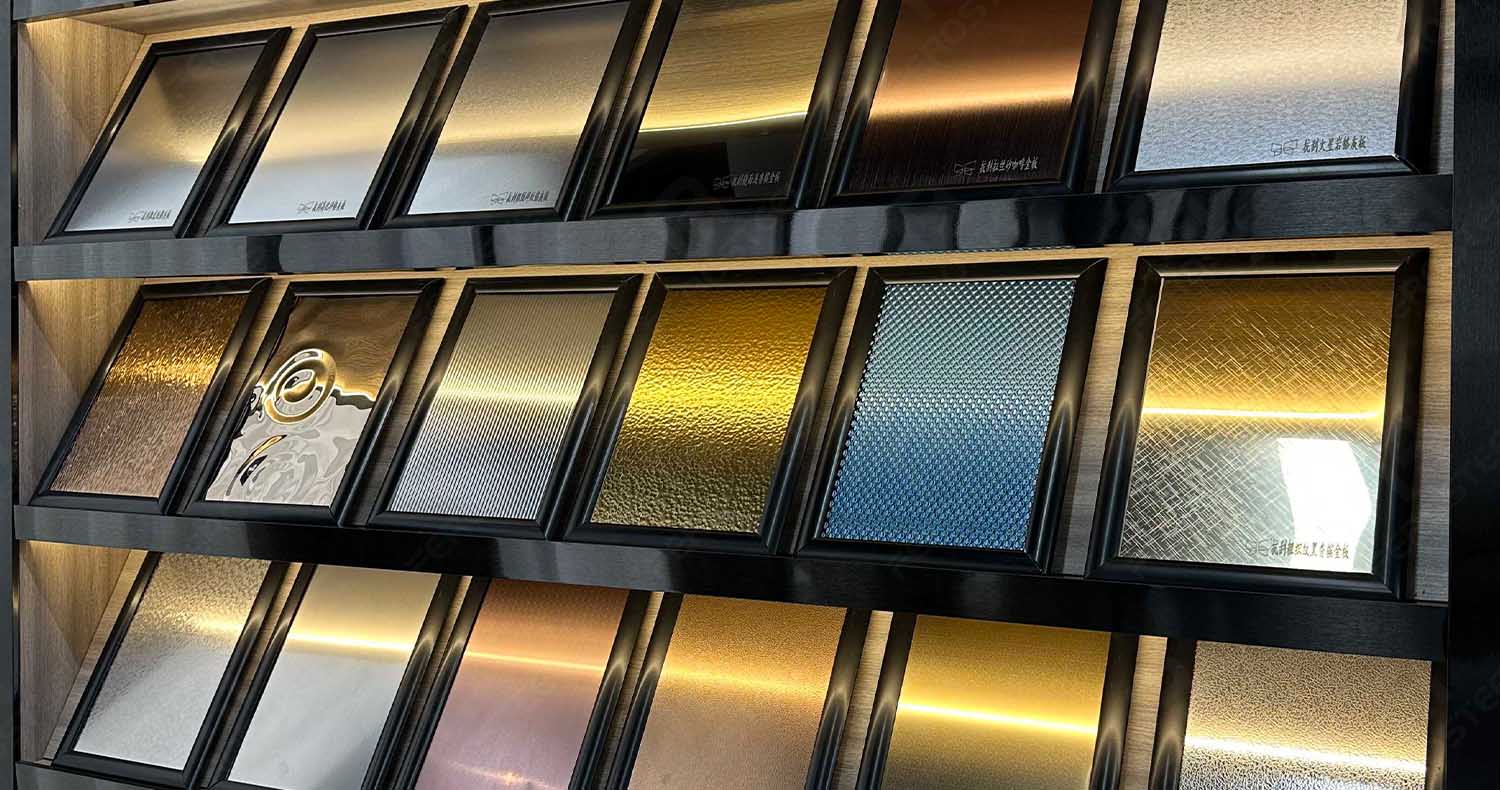
The range of PVD color options available today is remarkably broad. While early PVD technology was limited to gold tones, modern systems can produce dozens of distinct colors by varying the target material, reactive gas composition, and process parameters.
| Color Family | Common Name | Coating Material | Typical Applications |
|---|---|---|---|
| Gold Tones | 24K Gold, Champagne Gold, Rose Gold | TiN, ZrN, TiCN | Luxury hotel lobbies, retail fixtures, decorative columns |
| Copper & Bronze | Antique Bronze, Vintage Copper, Dark Bronze | TiCN, ZrCN, Cu-based alloys | Heritage restorations, hospitality interiors, elevator cabs |
| Black & Grey | Gunmetal, Graphite, Black Stainless | TiAlN, CrN, DLC | Modern minimalist architecture, high-end kitchen appliances |
| Blue & Purple | Sapphire Blue, Violet, Iridescent | TiO₂, ZrO₂, TiAlN | Feature walls, art installations, boutique retail |
| Champagne & Brass | Champagne, Satin Brass, Polished Brass | ZrN, TiN with gas control | Lighting fixtures, door hardware, decorative trim |
Ferosteel offers custom PVD stainless steel finishes where architects can specify exact color targets using RAL, Pantone, or physical reference samples. Custom color matching typically requires a 2-3 week development cycle involving small-batch sampling and spectrophotometer verification before full production begins.
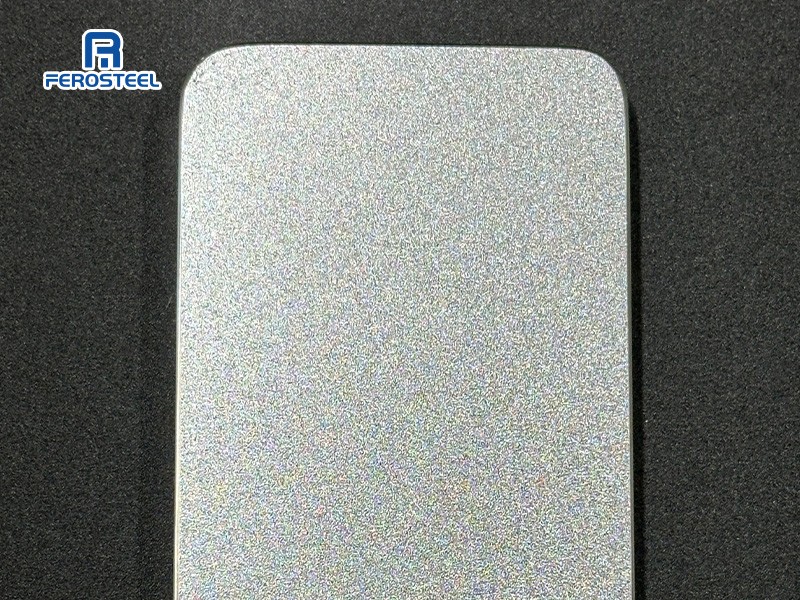
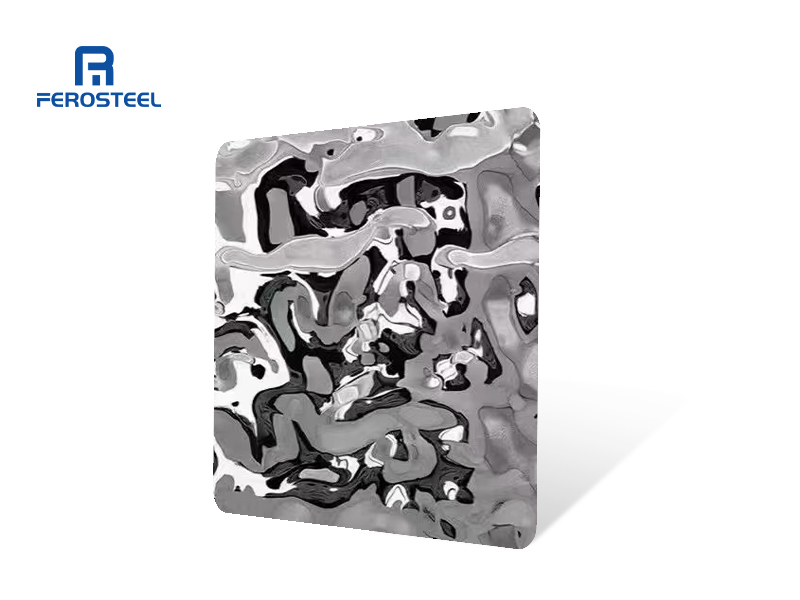
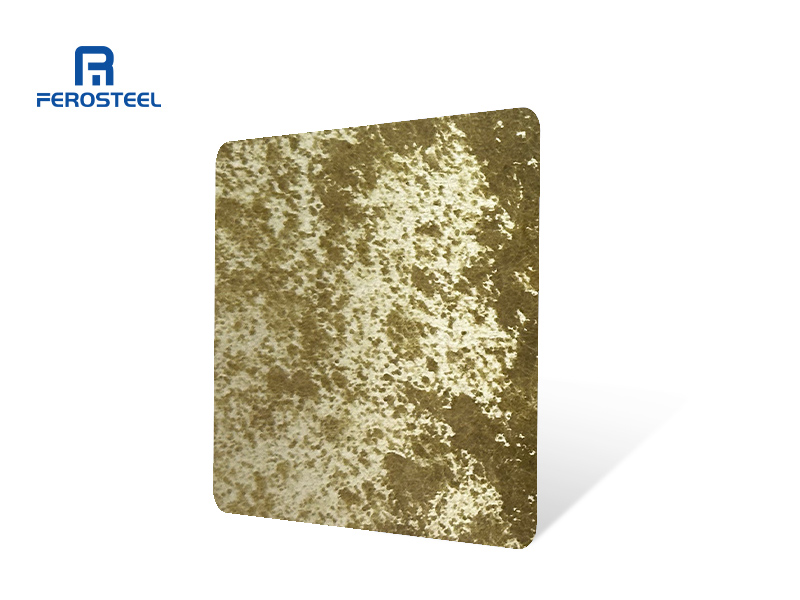
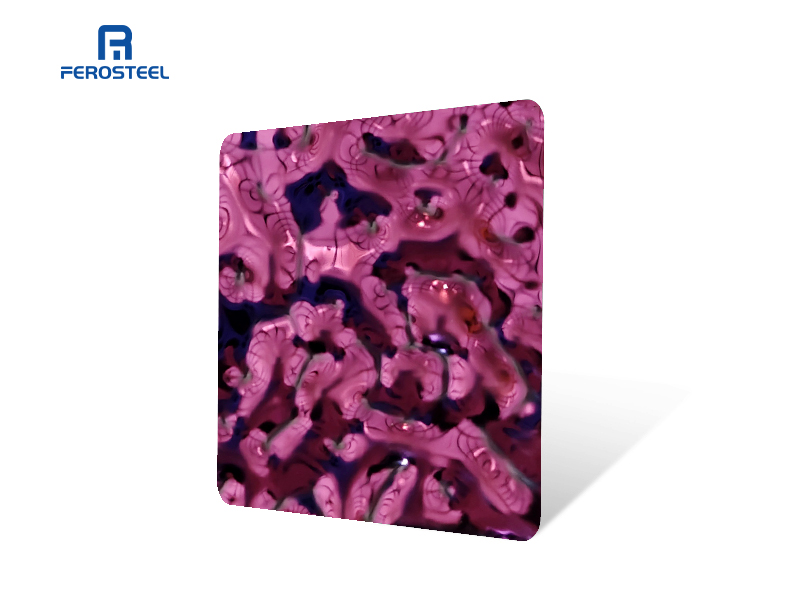
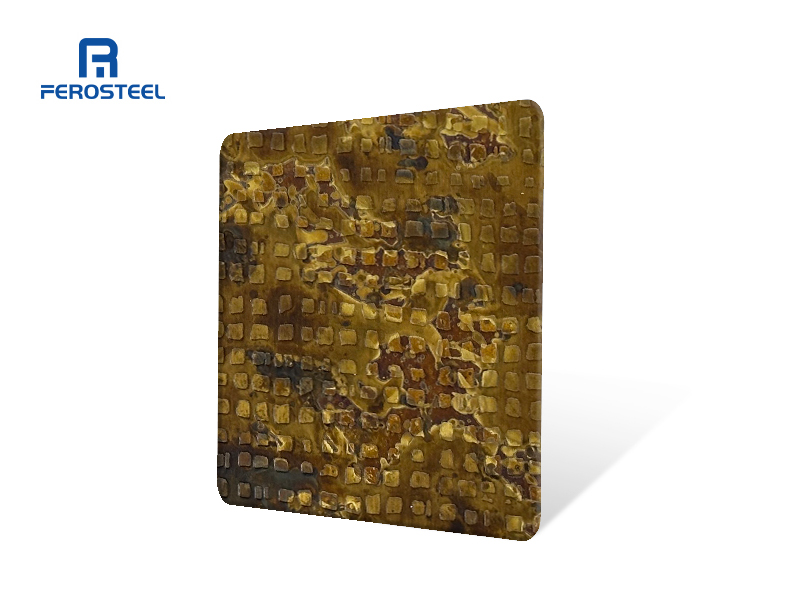
The same PVD color can also look dramatically different depending on the underlying surface texture. A mirror-polished substrate produces a highly reflective, jewel-like PVD finish; a hairline (brushed) surface yields a softer, satin appearance; and an etched or embossed texture creates a multi-dimensional effect where the PVD color shifts with light and viewing angle. Ferosteel's antique finish decorative panels demonstrate how combining surface texture with PVD coating unlocks premium design possibilities.
One of the most frequent questions from specifying architects is how PVD vs plating compares. Both produce colored metallic finishes, but the similarities largely end there.
| Property | PVD Coating | Traditional Electroplating |
|---|---|---|
| Process | Physical vapor deposition in vacuum chamber | Electrochemical deposition in liquid bath |
| Bond Type | Molecular/metallurgical bond to substrate | Mechanical and weak chemical adhesion |
| Hardness | 2,000–3,500 HV (approaching sapphire) | 150–600 HV depending on plating metal |
| Thickness | 0.3–5 microns | 5–25 microns typical |
| Wear Resistance | Excellent — resists scratching and abrasion | Moderate — prone to wear over time |
| Corrosion Resistance | Superior — dense, pore-free coating | Moderate to good — may have micro-porosity |
| Chemical Resistance | Excellent — inert to most chemicals | Fair — may react with acids and salts |
| Color Consistency | Highly consistent batch to batch | Can vary with bath chemistry |
| Environmental Impact | Zero hazardous liquid waste | Produces heavy-metal wastewater requiring treatment |
| UV Stability | Excellent — does not fade | Variable — some platings tarnish or fade |
| Cost | Higher initial setup, competitive at volume | Lower setup cost, higher per-unit environmental cost |
The key takeaway for architects: PVD coatings consistently outperform electroplated finishes in architectural applications where longevity, color stability, and environmental compliance matter. While PVD carries a modest premium on small quantities, it is the more cost-effective choice over the building lifecycle when maintenance and replacement costs are factored in.
Architects specifying materials for high-traffic public spaces need objective data on how PVD coatings perform under real-world conditions. Here is what the testing data shows:
PVD coatings, particularly those based on titanium nitride (TiN) and titanium aluminum nitride (TiAlN), achieve hardness values of 2,000–3,500 HV on the Vickers scale. For reference, hardened tool steel is approximately 700–800 HV, and the 304 stainless steel substrate underneath is around 200 HV. This means a PVD-coated stainless steel panel is roughly 10–15 times harder at the surface than bare stainless steel, providing excellent resistance to scratching from everyday contact.
PVD coatings are inherently dense and pore-free, creating an effective barrier against moisture, chlorides, and corrosive chemicals. Salt spray testing (ASTM B117) demonstrates that PVD-coated 316L stainless steel can withstand over 1,000 hours of continuous salt fog exposure with no visible degradation — making it suitable for coastal and marine environments where bare stainless steel may eventually show tea staining.
Unlike organic coatings and some electroplated finishes that can yellow, chalk, or fade under prolonged UV exposure, PVD coatings are ceramic in nature and inherently UV-stable. Accelerated weathering tests (QUV, Xenon arc) show minimal color change (ΔE < 2) after the equivalent of 10+ years of outdoor exposure. This makes PVD-coated stainless steel a reliable choice for exterior cladding, sunshades, and entrance portals where color consistency over decades is non-negotiable.
Because PVD coatings are inorganic ceramic films only a few microns thick, they contribute virtually zero fuel load in a fire scenario. PVD-coated stainless steel panels maintain the same Class A / A1 fire rating as the bare metal, making them fully compliant with international building codes for interior wall cladding and ceiling applications.
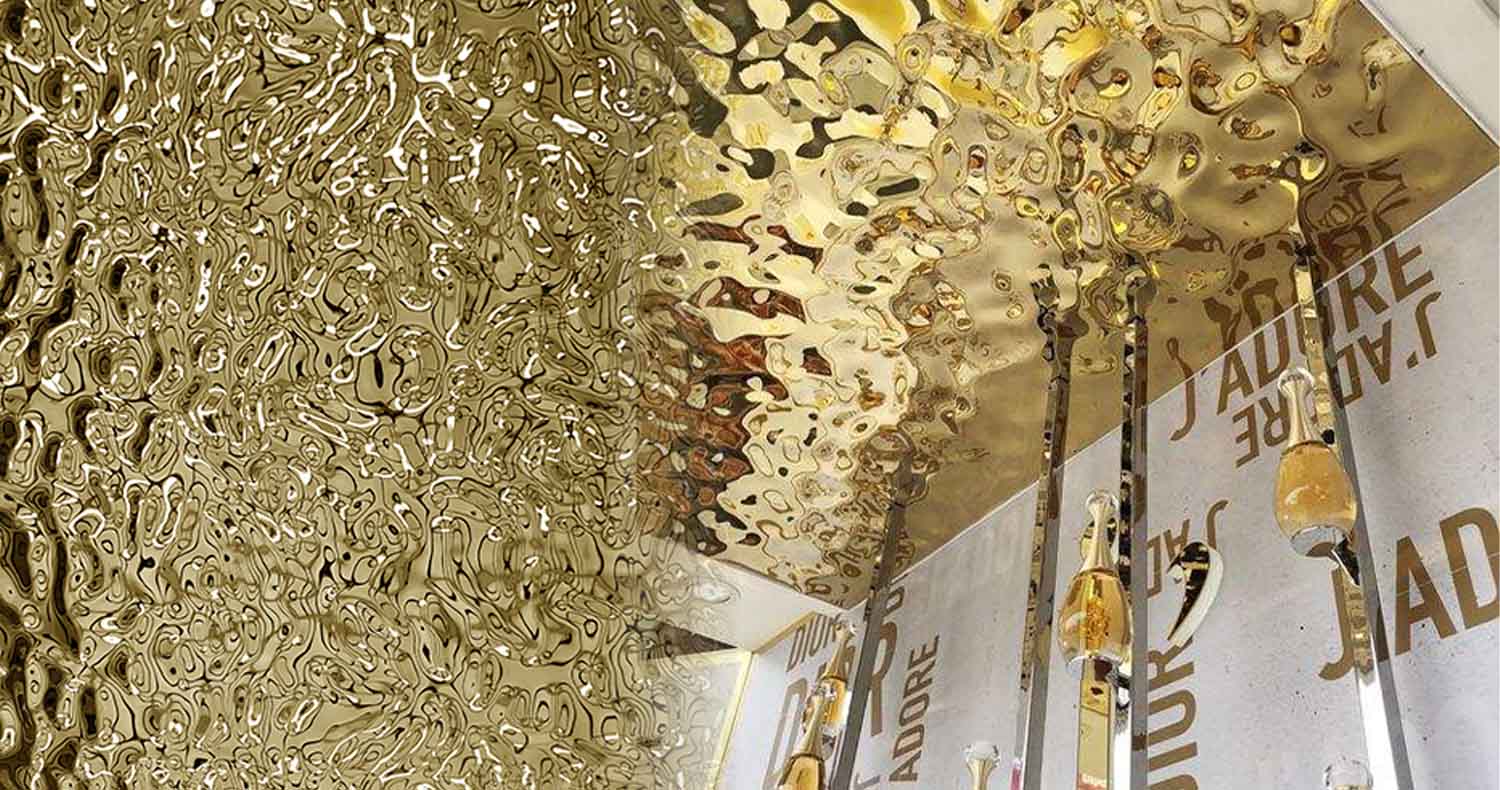
PVD-coated stainless steel panels are increasingly specified for feature walls in hotel lobbies, corporate headquarters, and luxury retail environments. A rose gold PVD finish on a water ripple textured panel creates a dynamic, light-catching surface that becomes the focal point of an entrance or reception area. The ability to match PVD colors across panels, trim pieces, and hardware ensures visual continuity throughout a space.
Elevator cabs are compact, high-touch environments where surface durability is paramount. PVD-coated stainless steel in champagne gold, antique bronze, or graphite finishes provides elevator interiors with a premium aesthetic that withstands thousands of daily touches, luggage impacts, and cleaning cycles without showing wear. Unlike painted or laminated surfaces, PVD finishes will not peel from edge impacts.
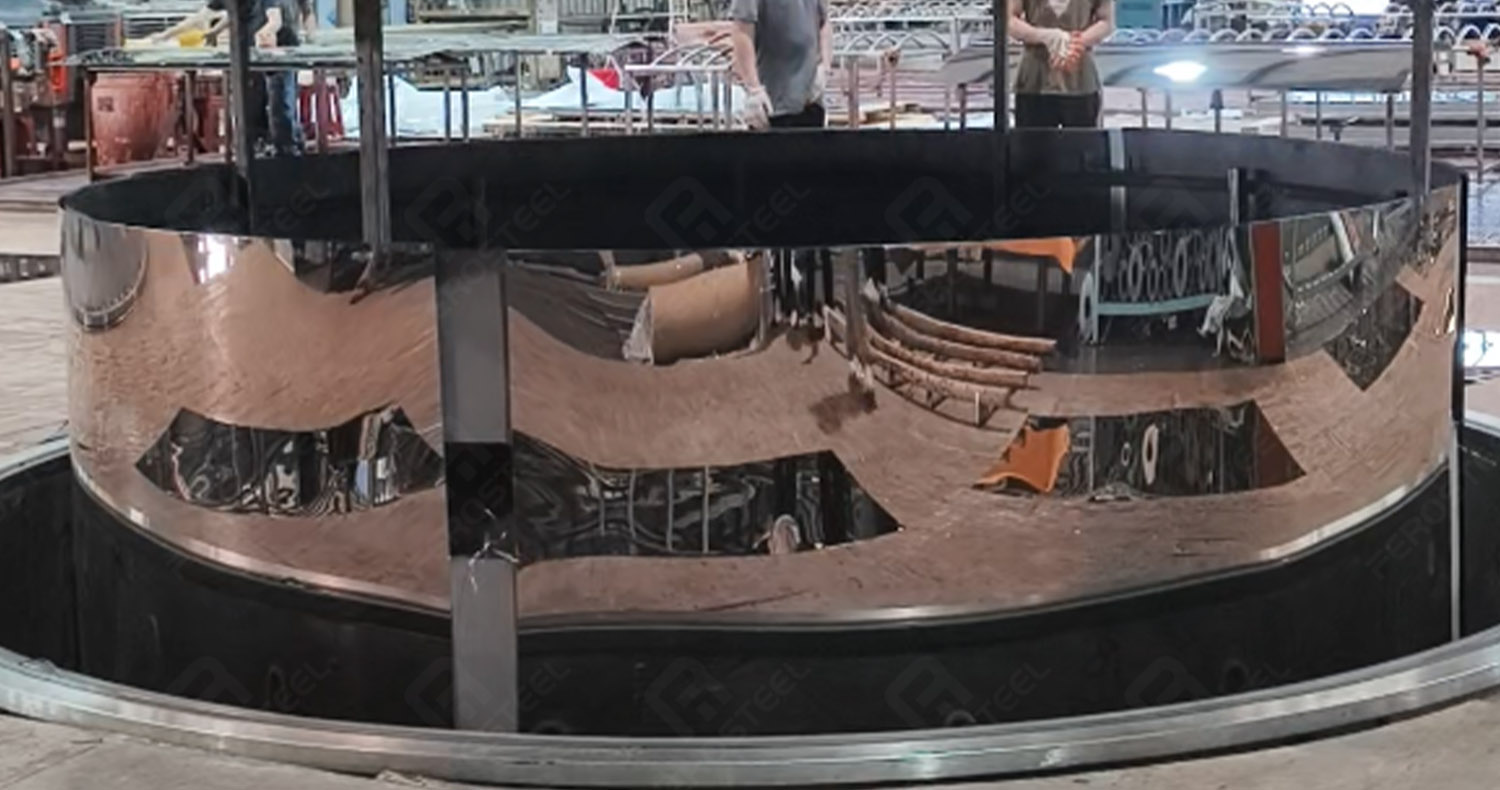
Wrapping structural columns in PVD-coated stainless steel transforms load-bearing necessities into design features. The reflective quality of a polished PVD gold or bronze column adds warmth and perceived spaciousness to retail atriums, airport concourses, and gallery spaces.
PVD finishes are ideal for tabletops, bar fronts, reception desks, and display fixtures. The combination of a durable PVD surface with an anti-fingerprint nano-coating keeps high-touch furniture looking clean throughout the day. Black PVD (TiAlN) on a hairline substrate creates a sophisticated gunmetal aesthetic popular in high-end restaurant and bar interiors.
For external applications, PVD-coated 316L stainless steel provides both corrosion resistance and lasting aesthetic appeal. Entrance canopies, sunscreen louvres, column covers, and signage panels in PVD champagne or bronze finishes create a distinguished street presence while requiring minimal maintenance.
| Application Environment | Recommended Coating Thickness | Expected Service Life |
|---|---|---|
| Interior — low touch (wall cladding, ceiling) | 0.3–0.5 microns | 15+ years |
| Interior — high touch (elevator, door, furniture) | 0.5–1.0 microns | 10+ years |
| Exterior — sheltered (canopy, soffit) | 0.5–1.0 microns | 10+ years |
| Exterior — exposed (façade, sunshade) | 1.0–2.0 microns | 10+ years |
| Marine / coastal | 1.5–3.0 microns on 316L | 10+ years |
Thicker coatings provide incrementally better durability but at higher cost. For most architectural interior applications, a 0.5–1.0 micron PVD coating on 304 stainless steel delivers excellent performance. Ferosteel's technical team can advise on the optimal specification for each project's specific environmental conditions.
PVD-coated stainless steel requires minimal maintenance, but a few simple practices will maximize its service life:
No. PVD coatings are ceramic compounds (titanium nitride, zirconium nitride, etc.) that are inherently UV-stable and chemically inert. Unlike organic paints or some electroplated finishes, they do not yellow, chalk, or fade. Accelerated weathering tests confirm color stability (ΔE < 2) after the equivalent of 10+ years of outdoor exposure.
PVD gold (titanium nitride) is approximately 10× harder than electroplated gold, chemically bonded rather than mechanically adhered, and will not peel or wear through at edges. Electroplated gold is softer, thicker, and can tarnish or wear off in high-touch areas. PVD gold also produces zero hazardous wastewater during manufacturing.
Yes, when specified correctly. Use 316L stainless steel as the substrate for exterior applications, and specify a coating thickness of at least 1.0 micron. PVD-coated 316L performs well in urban, suburban, and coastal environments. For projects within 500 meters of breaking surf or in heavy industrial pollution zones, consult Ferosteel's technical team for a project-specific assessment.
Yes, PVD is considered a green coating technology. The process takes place in a sealed vacuum chamber with no liquid chemical baths, no heavy-metal wastewater discharge, and no volatile organic compounds (VOCs). The coating materials are inert and non-toxic. This makes PVD-coated stainless steel eligible for LEED, BREEAM, and other green building certification credits.
Yes. Ferosteel uses spectrophotometer-based color measurement (CIE Lab* color space) to maintain tight tolerances (typically ΔE < 1.5) across production batches. For large projects requiring panels produced over multiple weeks, process parameters are locked and recorded to ensure color consistency. Custom color matching to RAL, Pantone, or physical samples is available with a pre-production sampling stage.
PVD coating does not affect the recyclability of stainless steel. The ultra-thin ceramic coating (a few microns) represents an insignificant fraction of the total material mass and burns off or dissolves during the steel recycling process. The stainless steel substrate remains 100% recyclable with no degradation in material properties.
Ferosteel manufactures premium PVD-coated stainless steel sheets in standard and custom colors, with substrate options in 304 and 316L grades. Our in-house PVD coating line ensures consistent quality, competitive lead times, and full technical support for architectural specification.
Contact us today for free samples, color swatches, and a project-specific quotation. Our technical team is available to advise on the optimal PVD specification for your next architectural project
 Office address: 26 Floor, Shibo Financial Center, Fenjiang South Road No.38, Chancheng, Foshan, GuangDong, China
  Phone
: +86 -18024913898
Phone
: +86 -18024913898 Correo electrónico
: [email protected]
Correo electrónico
: [email protected]


 IPv6 RED SOPORTADA
 dejar un mensaje